60 contestants and 20 team leaders from Austria, Croatia, Czech Republic, Germany, Hungary, Lithuania, Poland, Slovakia, Slovenia and Switzerland
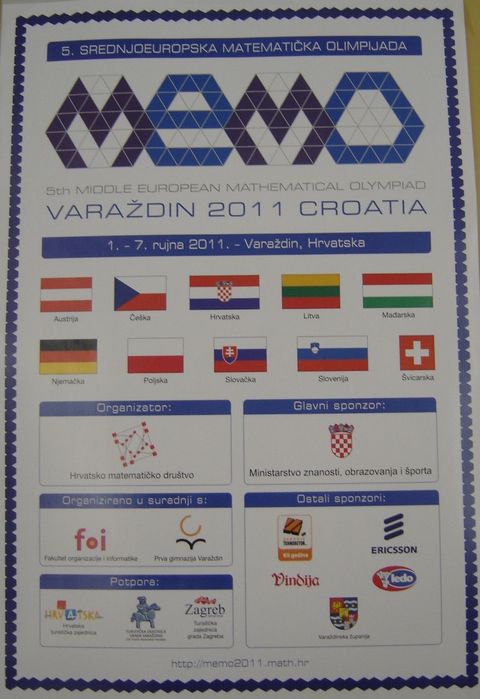
| About Middle European Mathematical Olympiad – MEMO The Middle European Mathematical Olympiad (MEMO) is the continuation of Austrian-Polish Mathematical Competition (APMC), held 29 times from 1978 to 2006. Now ten countries participate in the MEMO: Austria, Croatia, Czech Republic, Germany, Hungary, Lithuania, Poland, Slovakia, Slovenia and Switzerland. Similar to the IMO, each country participates with at most six students and two team leaders. At a meeting of representatives of MEMO countries held in 2006 during the IMO in Slovenia it was pointed out that one of the goals of the new competition was to enable a larger number of students to gain experience in international competitions. Therefore, the teams participating in the MEMO are typically disjoint from the IMO teams (except the Slovenian team). Also, in order for MEMO to help younger students prepare for some future International Mathematical Olympiad, students in their senior year are not eligible to be in the MEMO team. The most important part of the MEMO are the individual and team competition, each lasting five hours. The problems are of the “olympic” type, typically divided into four areas: algebra, combinatorics, geometry and number theory. At the individual competition the students solve one problem from each area. The team competition test consists of eight problems, two from each area (although at the first two MEMOs the team competition also had only four problems). In team competition the students solve the problems together, which gives the competition a very special atmosphere. The team part of the competition existed also at the APMC, but it is otherwise a rarity in mathematical competitions. The whole program lasts for one week. Besides the individual and team competition, it contains excursions, entertainment and sports activities. The 5th Middle European Mathematical Olympiad was held in Varaždin, Croatia, from 1st to 7th September 2011. About a hundred participants are expected, including 60 contestants and 20 team leaders and their deputies. The organiser of the 5th MEMO is Croatian Mathematical Society in cooperation with Faculty of Organization and Informatics, Varaždin. The competition will be held in Prva Gimnazija (First Gymnasium) Varaždin. Financial support is provided by the Ministry of Science, Education and Sports and other sponsors. Source memo2011.math.hr Organising Committee prof.dr. Hrvoje Kraljević, President, President of the Croatian Mathematical Society Matija Bašić, dipl. ing. doc.dr. Mea Bombardelli prof.dr. Ilko Brnetić prof.dr. Blaženka Divjak, Vice-rector of the University of Zagreb Milada Erhatić, prof. doc.dr. Zlatko Erjavec dr. Željko Hanjš prof. dr. Tihomir Hunjak, Dean of Faculty of Organization and Informatics, Varaždin Tonći Kokan, dipl. ing. Anica Kovae, prof. Tomislav Pejković, dipl.ing. Branko Topić, prof. Problem Committee Matija Bašić, dipl. ing. prof. dr. Andrej Dujella Ivan Kokan, MSc ing. comp. Tonći Kokan, dipl. ing. prof. dr. Mario Krnić Tomislav Pejković, dipl. ing. Math problems for the 2011MEMO competition in Varaždin, Croatia |
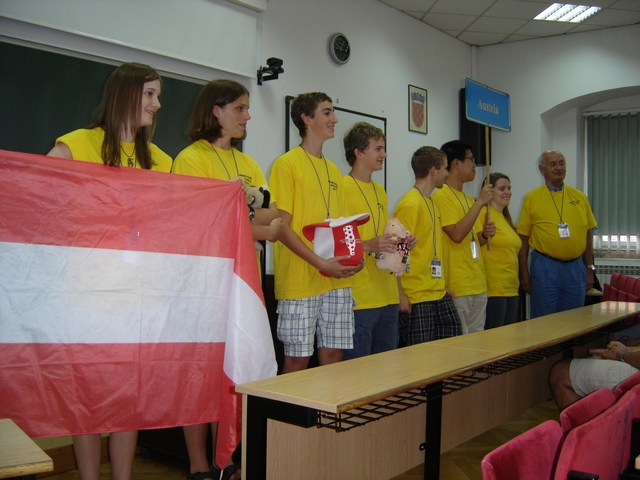
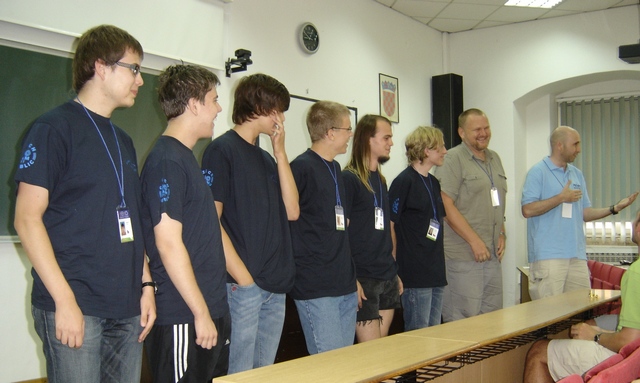
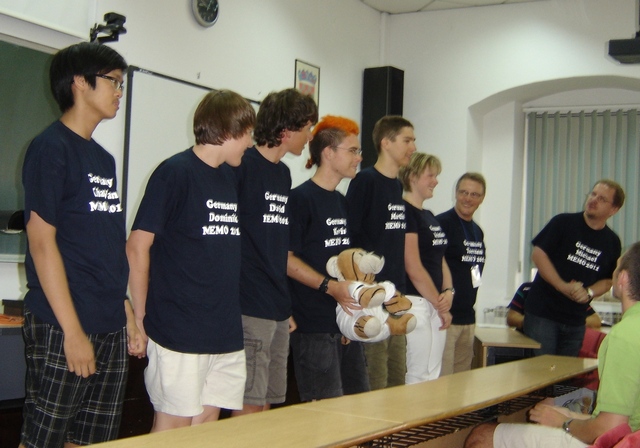
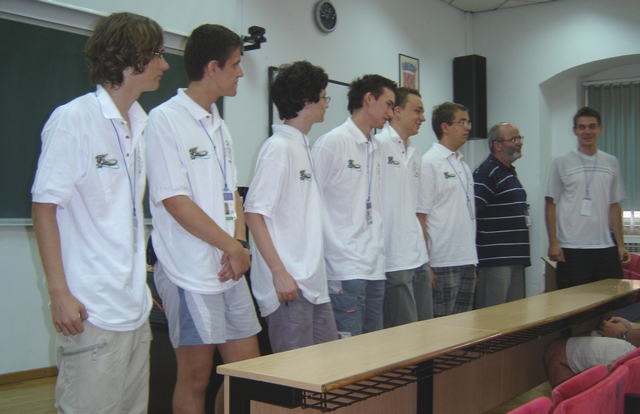
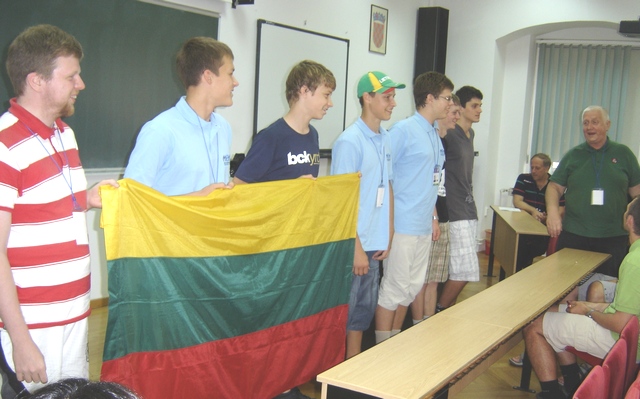
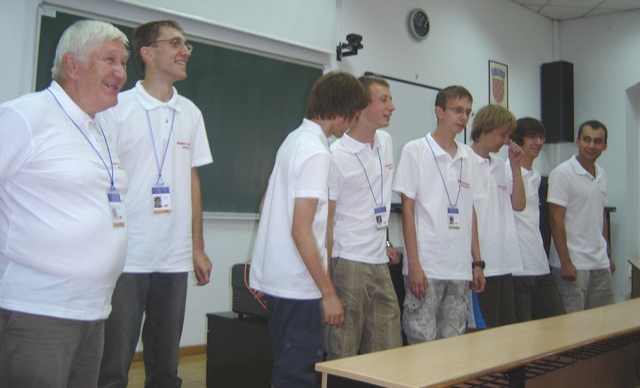
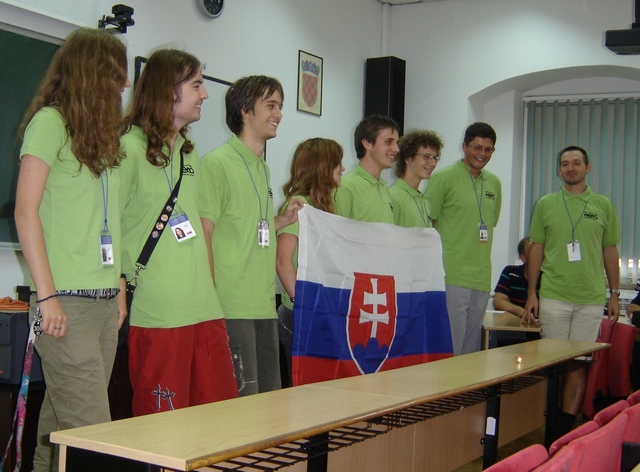
Slovakia
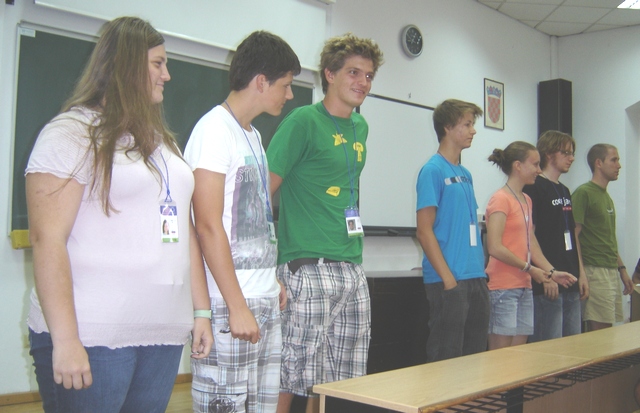
Slovenia
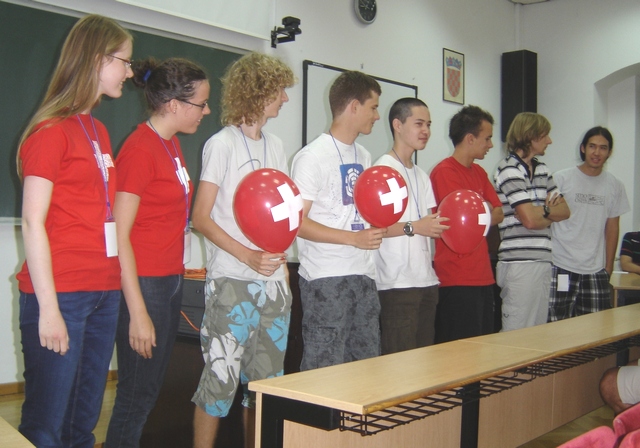
Switzerland
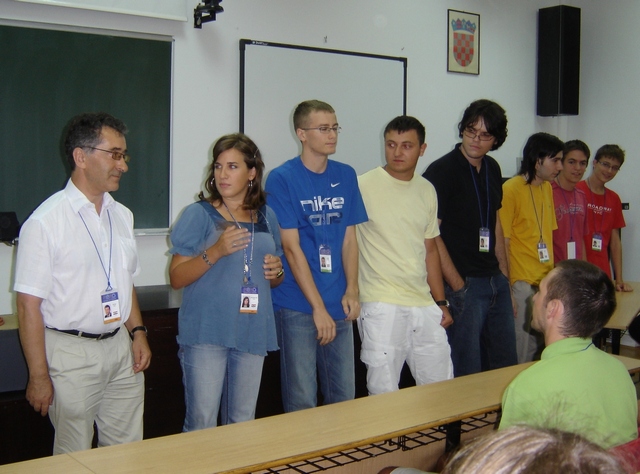
Croatia
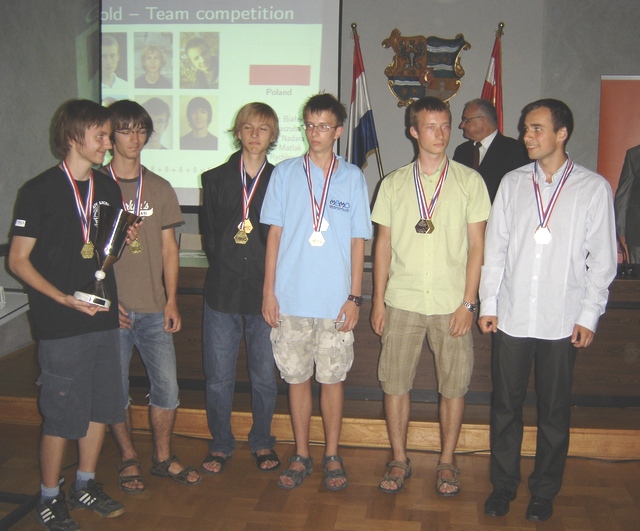
The most successful team of the MEMO olympiad: Poland
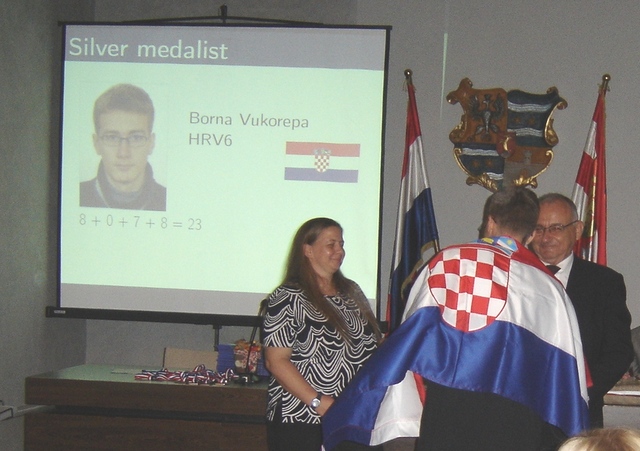
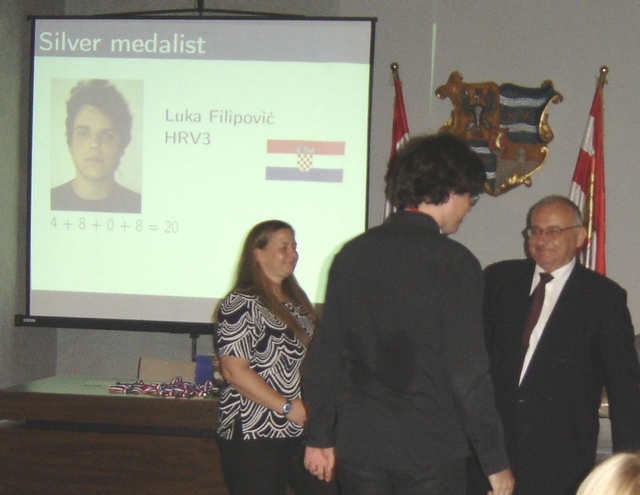
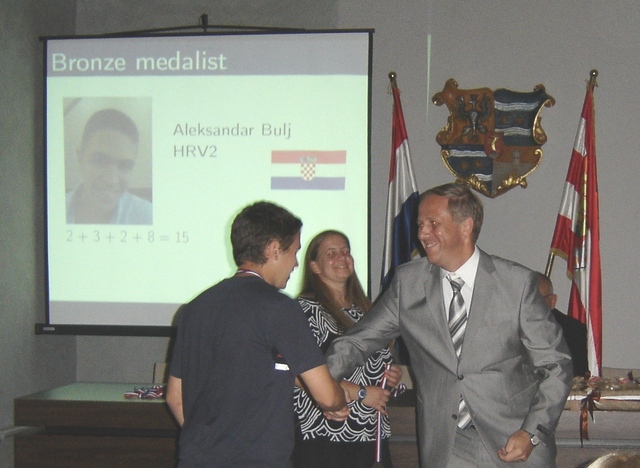
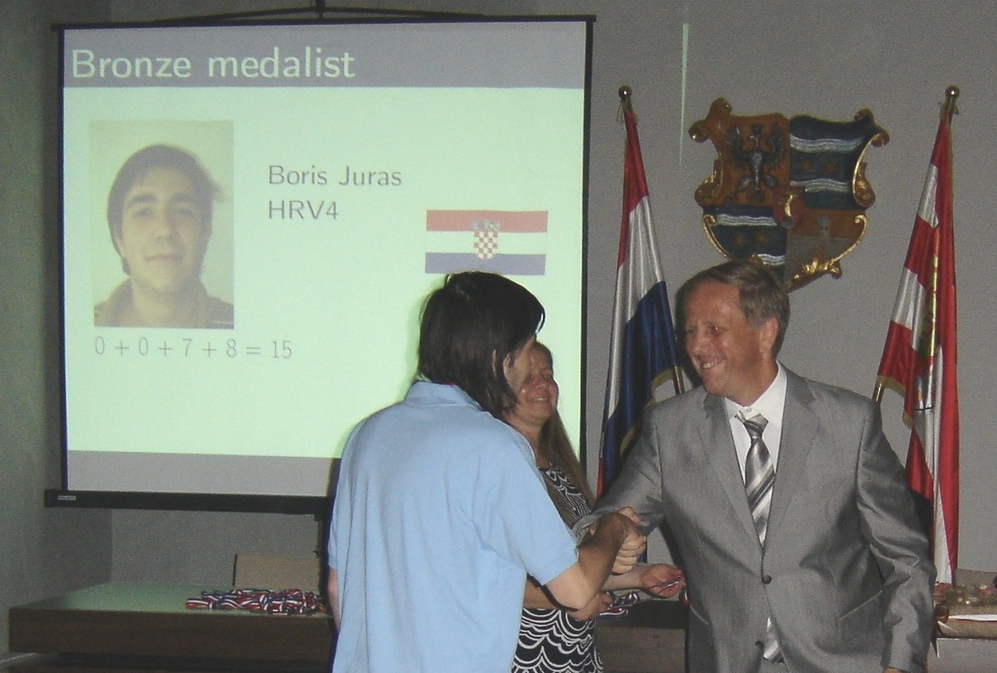
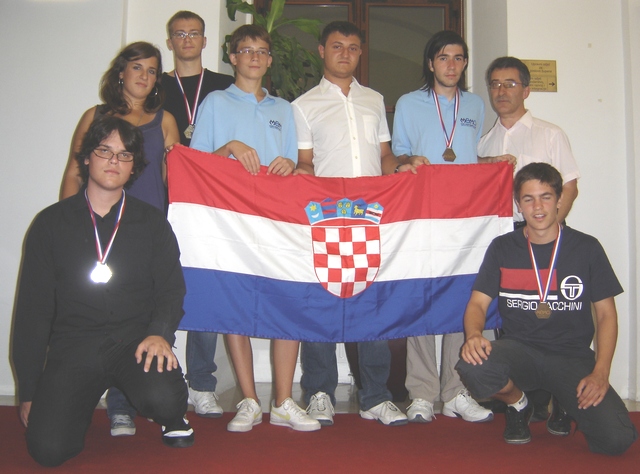
Awarded Croatian students:
On the left dr. Mea Bombardelli and on the right prof.dr. Hrvoje Kraljević, both of the University of Zagreb
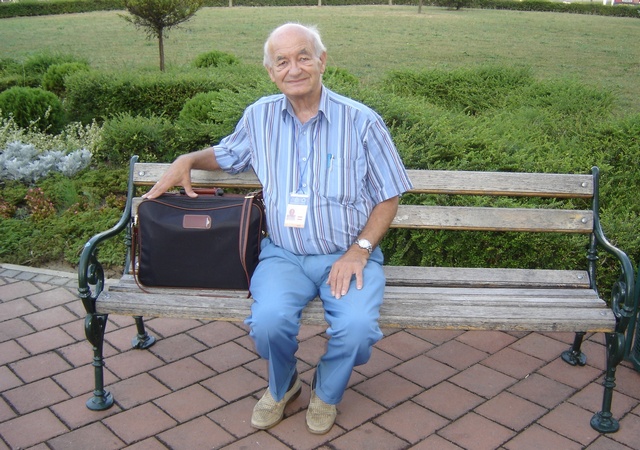
Professor Gerd Baron, Austria, spiritus movens of the MEMO Olympiad, enjoying in Varaždin.
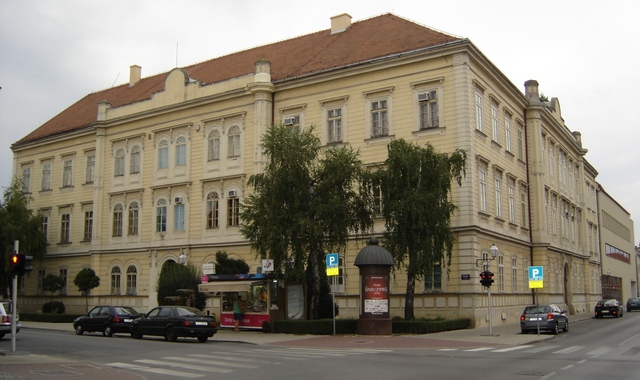
The Varaždin Gymnasium where the MEMO competition was held.
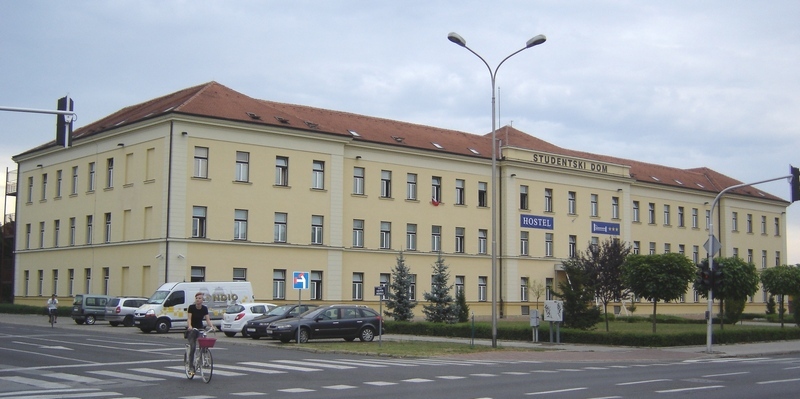
Student dormitory and hostel in Varaždin, where the teams where lodged.
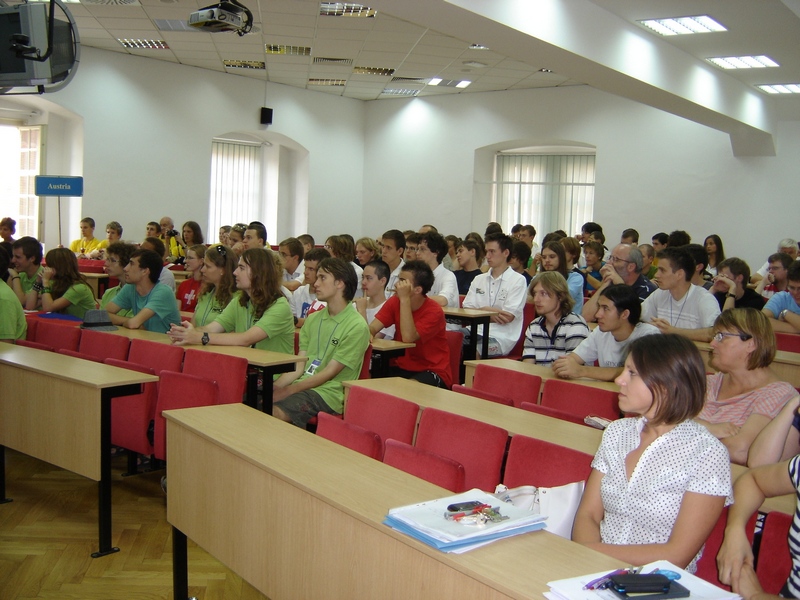
Opening of the 5th Middle European Mathematical Competition on the Faculty of Organization and Informatics in Varaždin, Croatia.
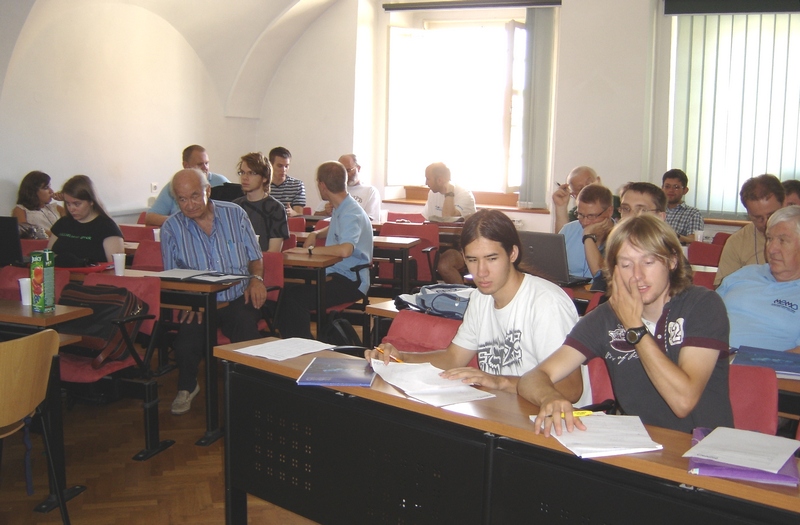
Professors Ilko Brnetić, Croatia, and Gerd Baron, Austria.
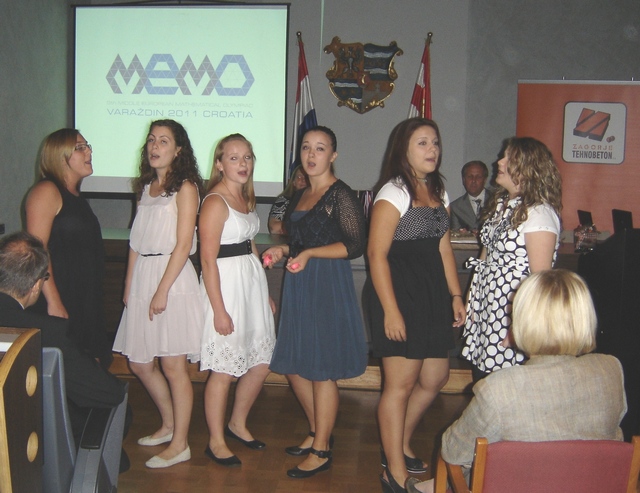
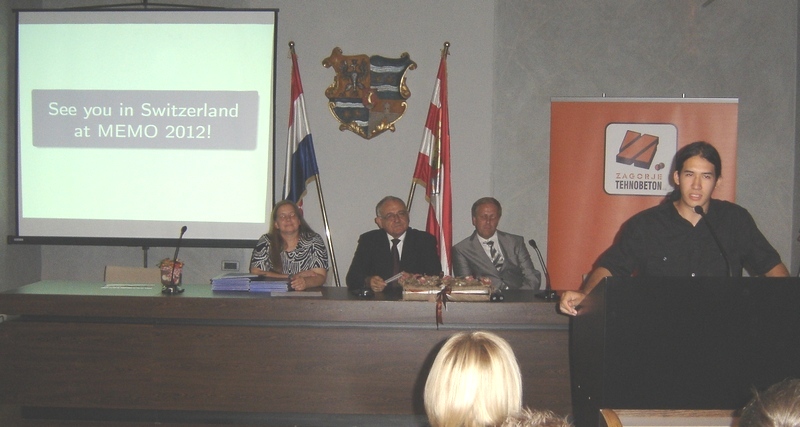
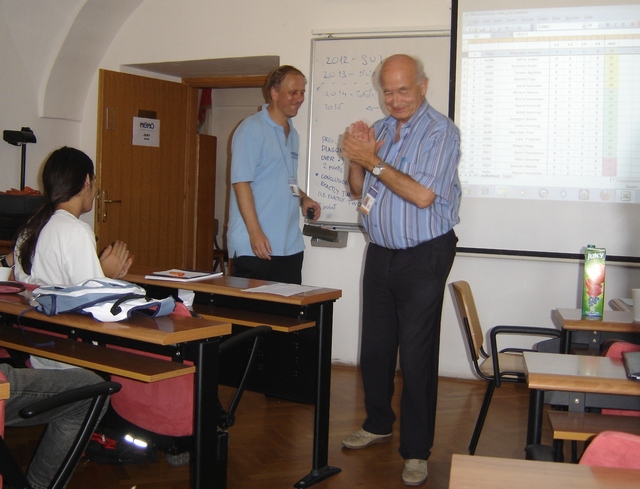
Dr. Pascal Su announcing the forthcoming 2012 MEMO competition in Switzerland.
Behind him dr. Mea Bombardelli, prof.dr. Hrvoje Kraljević and prof.dr. Ilko Brnetić from the University of Zagreb.
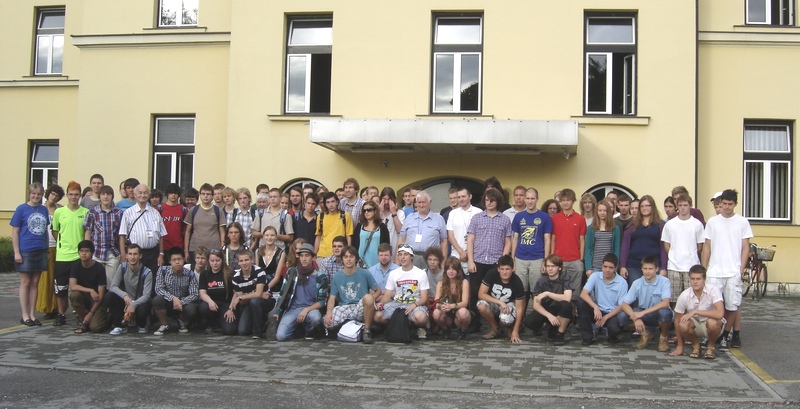
Excursions to the Trakošćan castle, Varaždin spa, and Zagreb
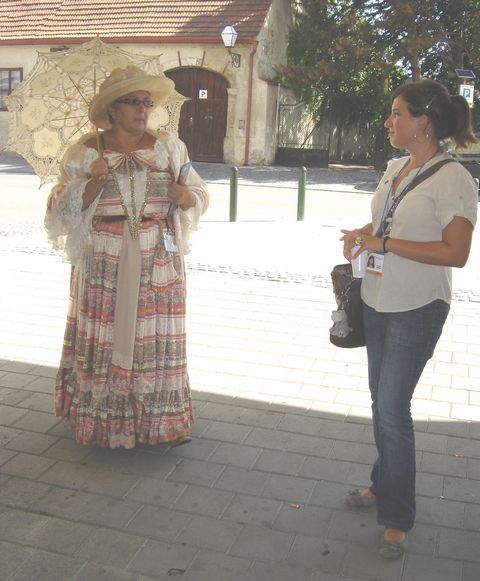

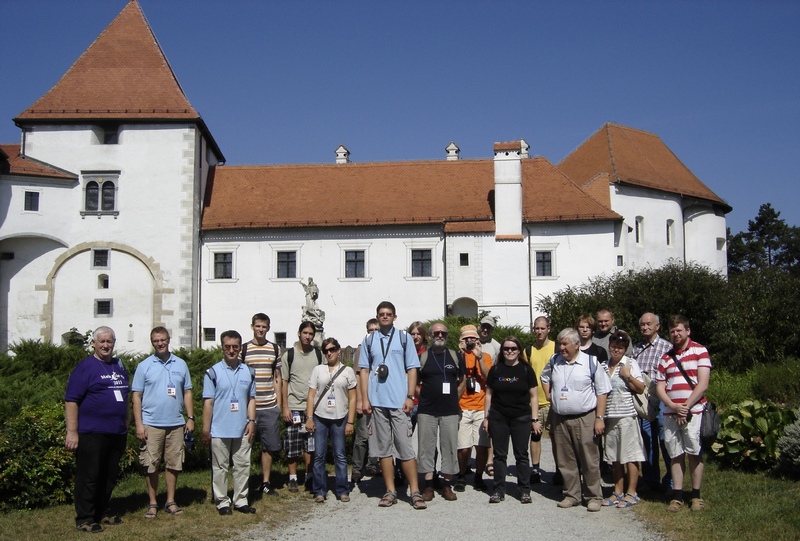
Trakošćan castle on the north of Croatia
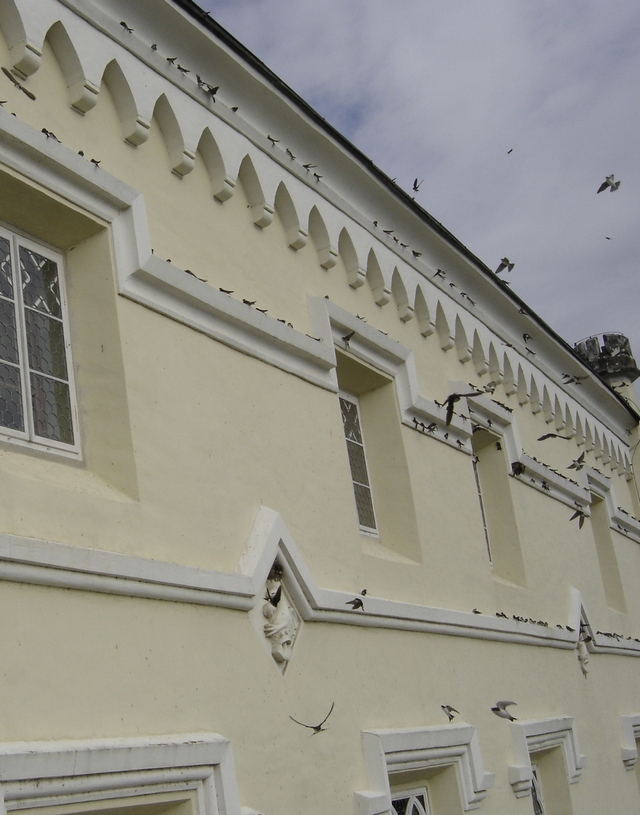
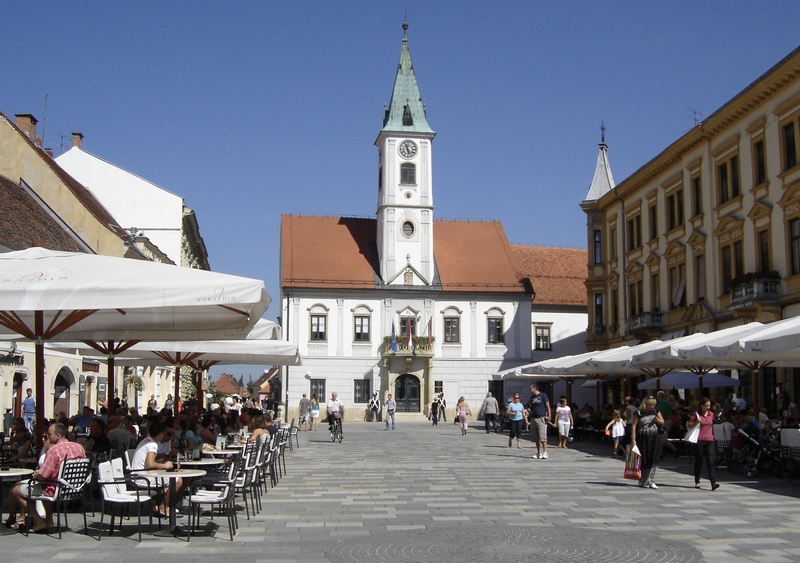
The Square of King Tomislav (Croatian king, Xth century)
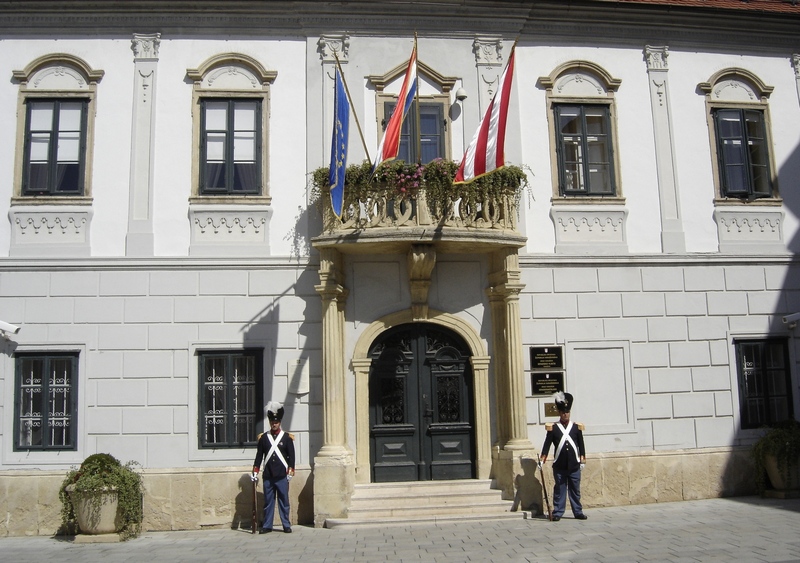
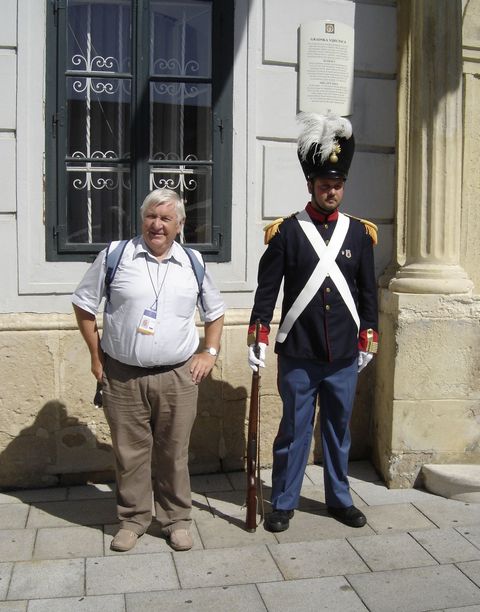
City Hall of Varaždin with two purgars – Varaždin home guard.
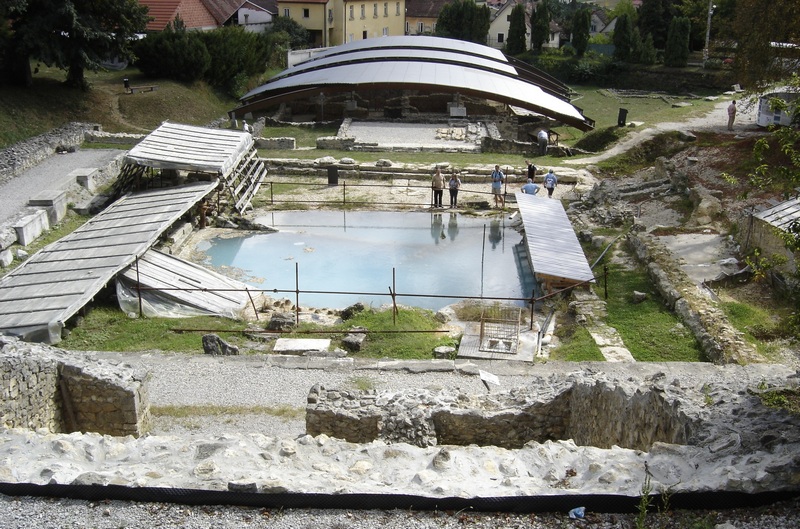
Excursion to Varaždinske toplice, with Roman archaeological site near the city of Varaždin
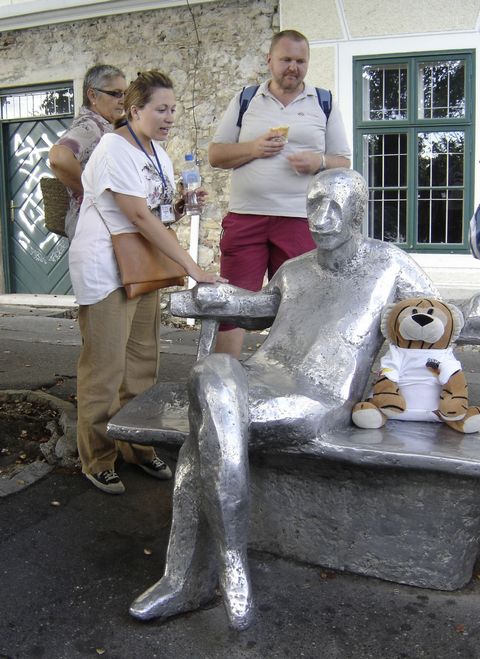
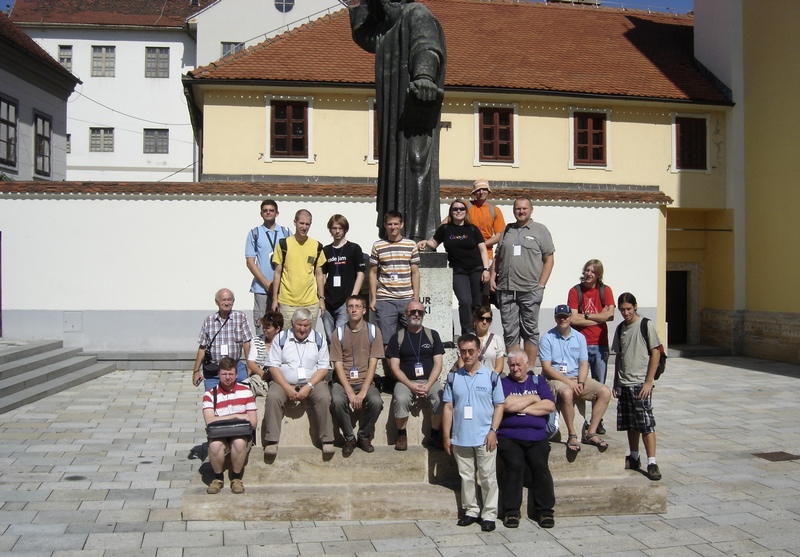
Croatian poet and writer Antun Gustav Matoš “sitting” on a bench in Zagreb. Behind him dr. Pavel Calabek, deputy leader of the Czech math team.
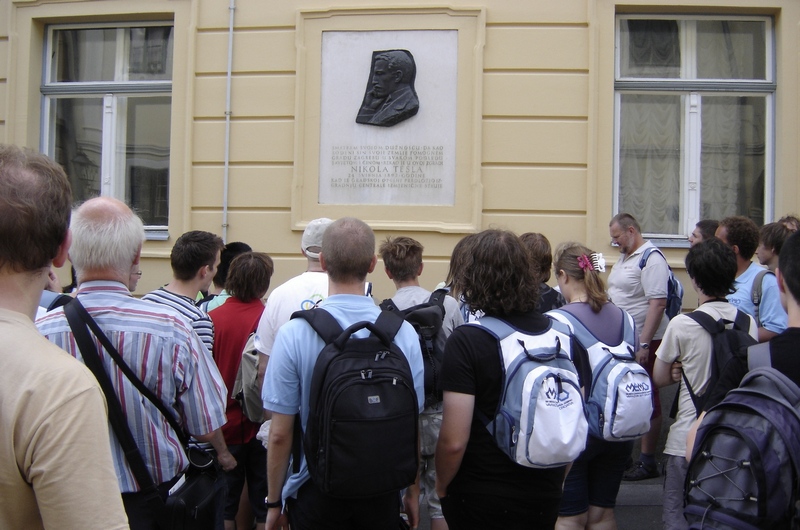
In front of the plaque in honour of a famous inventor Nikola Tesla 1856-1943.
The unit of magnetic induction is tesla, named after him.
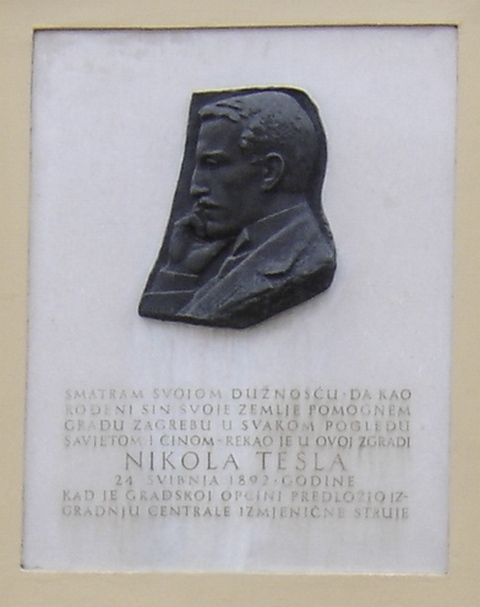
When mother of Nikola Tesla died, he paid a visit to Zagreb in 1892, where he gave a lecture about alternating current. On that occasion he said:
As a son of my homeland I feel it is my duty to help the city of Zagreb in every respect with my advice and work
(Smatram svojom dužnošću da kao rođeni sin svoje zemlje pomognem gradu Zagrebu u svakom pogledu savjetom i einom).
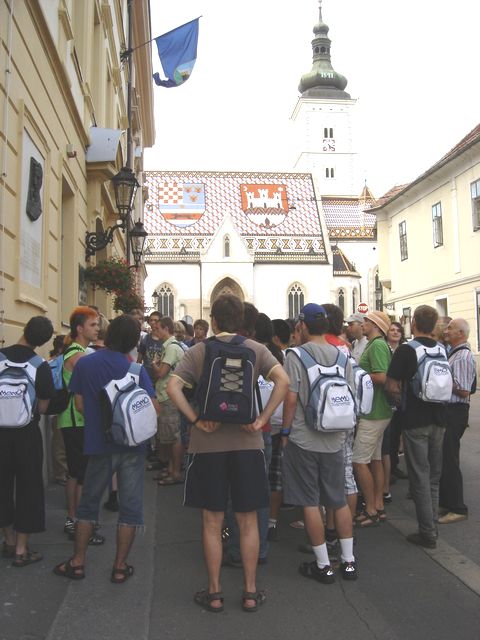
A view to the church of St. Marko in Zagreb from Ćirilometodska street.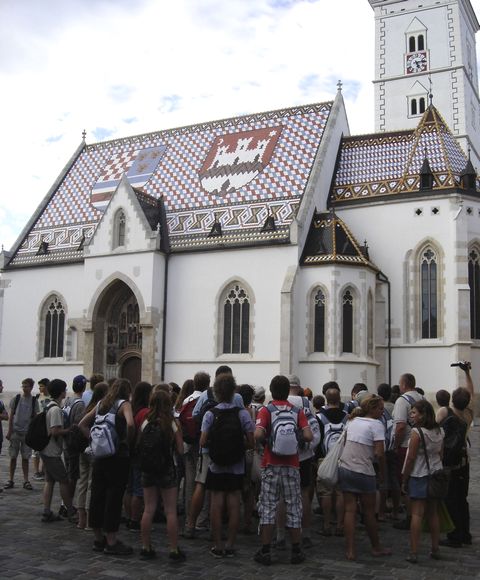
The church of St. Marko in Zagreb with its famous roof containing Croatian coat of arms on the left, and the coat of arms of the city.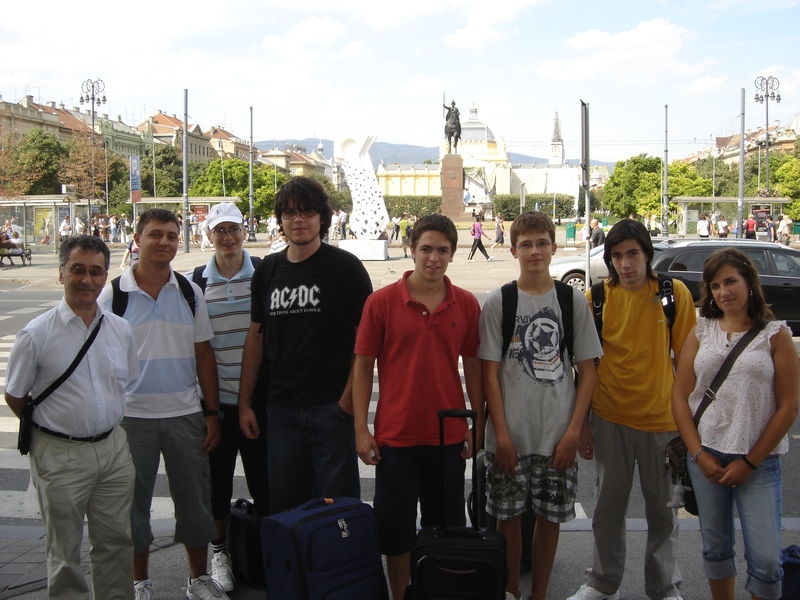
Croatian math team at the King Tomislav Square in Zagreb:
Dr. Željko Hanjš (University of Zagreb), leader, Verner Vlačić (Rijeka), Borna Vukorepa (Zagreb), Luka Filipović (Zagreb), Aleksandar Bulj (Rijeka),
Mislav Balunović (Slavonski Brod), Boris Juras (Zagreb), Kristina Ana Škreb, BSc (Universty of Zagreb), deputy leader.
Formated for CROWN by prof.dr. Darko Žubrinić
Distributed by www.Croatia.org . This message is intended for Croatian Associations/Institutions and their Friends in Croatia and in the World. The opinions/articles expressed on this list do not reflect personal opinions of the moderator. If the reader of this message is not the intended recipient, please delete or destroy all copies of this communication and please, let us know!


