
Relationships between Maori and Croats
In this recording you will frequently hear the Maori name TARARA, which is the name for CROATIANS
| Mai ra ano kua mahi tahi nga iwi Tarara me nga iwi maori i roto i nga mahi keri kaapia i Muriwhenua. Na whai ano i whakatuuria ai e Te Roopu Tarara o Aotearoa he whakangahau Kirihimete hei kohi putea ma ngä whanau i raru nui i te ru whenua. I reira hoki te kapa haka o Ihi Connections e whakawana ana i te po. |
Maori and Croatians have worked together for many years, starting with gum diggining in Northland. This year, the Croatian club has organized for the proceeds of their 2011 Christmas concert to go to the Christchurch Earthquake rebuild. Ihi Connections was there supporting the occasion. |
 Tarara: Croats and Maori in New Zealand: Memory, Belonging, Identity Tarara The cultural politics of Croat and Maori identity in New Zealand Senka Bozic-Vrbancic Key Points
At the turn of the twentieth century, Croatians were migrating from Dalmatia, then part of the Austro-Hungarian Empire, and Maori, having become part of the British Empire, were losing much of their land. All were looking for work. They came together on the gumfields of the far north, digging up kauri gum resin for export.
About the Author |

| TARARA The origin of the name of Tarara is most probably related to singing a melody without words, using rhytmical pattern Ta-ra-ra… Dalmatian Croats are known for their passionate love of music. According to late Ljubo Stipišić Delmata, in Croatia there are currently about 400 klapa choirs. This is a unique phenomenon of Croatian music, and not only Croatian. |
| The Dalmatians/Croatians – Frano Botica  Frano Botica 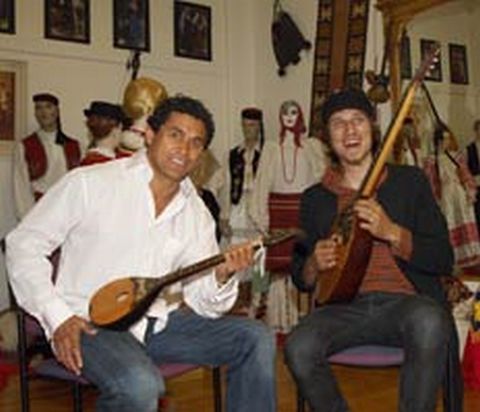 Frano Botica playing Croatian tamburitza I reckon my Dalmatian side is pretty strong. I love food, I like a glass of wine, I like to gather around the guitar as the night wears on. I guess I’m also pretty determined – when I want something I go out and make it happen. |
The first recorded marriage between a Dalmatian gum digger and a Maori was in 1891. Another gum digger, Lovro Petricevich, married Makareta Raharuhi of the Ngati Kuri tribe. Lovro became fluent in Maori, and when he died he was buried on his wife’s marae in accordance with local custom. Their daughter, Dame Miraka Szaszy, was the first Maori woman to graduate from Auckland University.
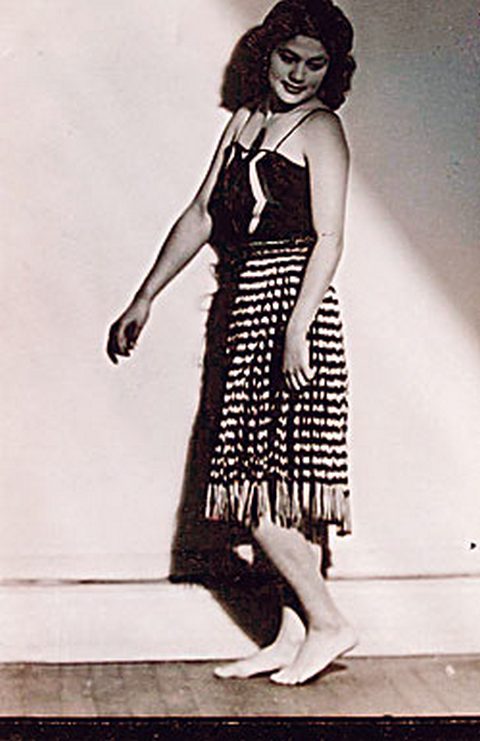 Dame Mira Szaszy, b. Petricevich, the first Maori woman to graduate from Auckland University
The descendants of Dalmatians and Maori remain proud of their mixed cultural and linguistic heritage. In March 2010 the 11th annual Tarara Day was celebrated in West Auckland, jointly organised by Te Waipareira marae and the Croatian Cultural Society. ‘Tarara’ is the Maori term for people of Dalmatian descent. About Dame Mira Szászy The late Dame Mira Szászy DBE, CB, QSMJP, BA, DipSocSci, LLD (Vic) was one of the most outstanding Māori women leaders of the 20th century. Dame Mira was the first Māori woman to graduate with a degree from The University of Auckland. She was a former President of The Māori Women’s Welfare League. In 1990, she was made Dame Commander of the British Empire. 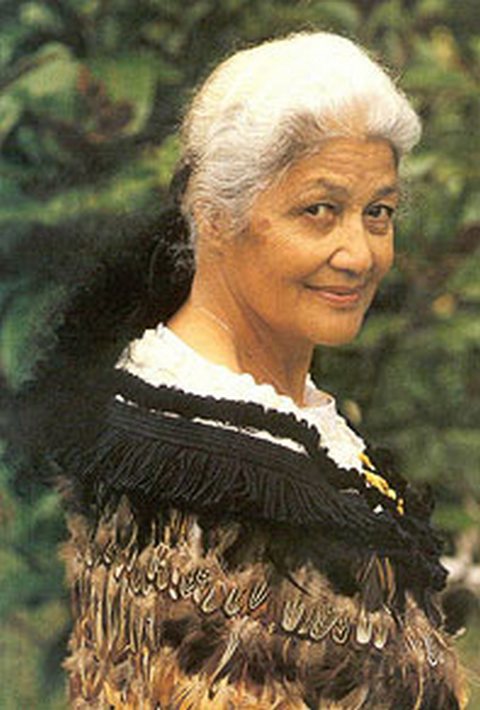 Dame Mira Szaszy, b. Petricevich “It’s a symbol of oppression. Even the Marae itself is a symbol of oppression for me because it is there that I am denied my very basic right of free speech. But it’s not just the free speech … It is the belief that women have their own wisdom to impart.
“I don’t think I have been particularly popular with some men. I suspect that some of that resistance is based on insecurity about their own position, and a desire perhaps to retain the last bastion of power that they have. I understand that our men have lost their forums or their power in society. They’re not in industry, they’re not in politics, nowhere do they have power, our people. What do you do when you don’t have power? You oppress those you can oppress.
“I have been told that to allow women to speak on the Marae would undermine Māori culture and would be its death knell. I said that if that is what Māori culture is hinged on, then I for one wouldn’t regret it dying. Because I don’t believe it you see. “I don’t believe that giving women their rights as human beings is a destructive thing. I think it’s a very positive thing and I believe that the liberation of every human being is part of the development of human society as a whole.” Creed My first love is my family but I love my tribe
I know my tribe but I am proud of my race I am proud of my race but I am not racist Therefore I belong to my race but I would serve my nation I would serve my nation but I have a reverence for humanity Because I have a reverence for all humanity I would oppose inhumanity anywhere and everywhere It is because I have this reverence for humanity that I grieve for all who now suffer, and pray for all mankind It is because I believe in God that I have this reverence for humanity. My family, my tribe, my race, my nation Let this be my vision of the future My extended family All creeds, all races, all nations Let this be my new world A part of my own humanity. In the beginning was God All things were made by Him And as many as were made by Him And as many as received Him To them gave He power to become His children This is my destiny This is my prayer Source www.business.auckland.ac.nz |
| Marica meandrings This evening I attended a celebration at Parliament honouring the contribution Croatians have made to New Zealand since the first settlers arrived in 1858. Today, 150 years later, life is very different for over 100,000 New Zealanders who claim Croatian heritage thanks to the hard work and determination of their (and my) ancestors. They have paved the way for us by embracing life in a new land while at the same time never forgetting where they came from. This pride has been passed down the generations and it was very evident amongst the people gathered tonight to celebrate and remember. One thing is painfully evident – the early Croatian settlers had an incredibly hard life. They found themselves heading straight for the Far North to become gumdiggers. They were ostracised and treated unfairly. Many were shocked to discover what they had come to. The sense of displacement and the vast cultural differences continued to cause problems for these settlers. They were so sure of the opportunities here that few were prepared for the reality. Most walked off their ships in Auckland with little money, food, and no English.
And to make things much worse, they were not welcome … They couldn’t do anything right by the British gumdiggers … They were accused of lowering the price of gum, and of damaging the economy by sending their hard-earned money back home to Croatia. One storekeeper declared proudly that he had refused on “all occasions” to give credit to the Croatians gumdiggers, but he had “never refused a Britisher”. Even the Prime Minister, Dick Seddon, described them as “locust-like”, and helped to usher in laws aimed at restricting the number of Croatians on the gumfields. Croatians were made to pay an alien fee, while large areas of Crown land were reserved just for the digger of British extraction”. … As far as the rest of New Zealand was concerned, Maori and Croatian were on equal standing, at the bottom of New Zealand society. Source Webby, K., & Misa, T. (2002). Tarara Maori: A forgotten history. Mana Magazine, 44, February-March, 32-36. Stephen Jelicich points out in his recently published book From Distant Villages, that it was impossible for these early settlers to create any kind of replica of their lives back in Croatia. They had to adapt and change if they were to survive. On the gumfields they had to reshape their lives and adjust to the harsh, bitter realities of virtual exile, unending toil and the loss of ties with their families left behind in their homeland (p46).
Throughout these tough times the Croatian personality shone through; we are a determined people. The saying, ‘When the going gets tough the tough get going’ really applied then and is equally as applicable to all those that followed later. The Croatian settlers from Dalmatia were and still are an outgoing people, generous to a fault and welcoming to all who approached then in genuine friendship. Frankness and honesty were notable qualities (p45).
Source Jelicich, S.A. (2008). From Distant Villages: the lives and times of Croatian settlers in New Zealand 1858-1958. Auckland, New Zealand: Pharos. It is no wonder that a special kind of relationship formed between the Maori and the Croatians at this time. Northland Maori coined the name ‘Tarara’ to identify anyone of Croatian descent. No one is exactly sure how this name came to be however there is speculation that it stems from the way the Croatians rolled their ‘r’s while others say it is because they spoke so fast (Webby & Misa, 2002). |
| Maori and Croat join in festivities BY JUSTIN LATIF Music and family are just two of the things that brought Croatians and Maori together during the early 1900s. And little has changed. Andy Stankovich is well-known for performing Elvis tunes around the region and co-owns a scrapmetal yard with his brother George. The pair also provide employment for their sons, nephews and a sister. The Stankovichs are of Maori and Croatian descent and are proud to be known as Tarara – the name originally given to people with both bloodlines in their heritage. They’ll be joining others of similar ancestry at the third Tarara Day this Sunday from 10am to 4pm at Birdwood Winery Estate in Massey. Andy’s grandfather emigrated from Vrgorac, Croatia, to Auckland in 1920 as a 20-year-old. He went north to Ahipara to work in the gum fields and it was there he met his future wife, Hiria Pene. Andy says his grandmother was a full-blooded Maori and his grandfather had more in common with her Te Rarawa people than English settlers. “Maori and Croatian all get on very well,” he says. “They have a similar way of looking at life and relationships.” His mother is also half Maori and half Croatian. Andy’s sister, Melba Wellington, is part of the organising committee for the event. She says one of her dreams is to visit relatives in Europe. “I’d love to go there. Other relatives have been and it’s supposed to be very picturesque. It’s also a very old country compared with our very new country.” Another common thread is an appreciation of good food and music. Melba says people will be able to get a combination of hangi and lamb on a spit this Sunday. Andy will also be entertaining the crowd with his Elvis songs. He thinks his musical abilities are a combination of both sides of his heritage. Source www.stuff.co.nz |
| Senka Božić Vrbančić KULTURNE VEZE MAORA I HRVATA Industrija kauri smole bila je jedinstvena novozelandska industrija (eksploatacija fosilizirane smole kauri stabla) korištena za proizvodnju lakova i linolenuma – koja je trajala od 1840-ih do 1950-ih u kojoj su sudjelovali i hrvatski kopaei doseljeni uglavnom iz Dalmacije na Novi Zeland, gdje su lakše ostvariti društveni kontakt s maorskim, nego sa anglosaksonskim kopaeima o eemu svjedoee njihovi logori, kao što su Sweetwater, Waiharara i Ahipara . S krajem industrije smole prijateljstva sklopljena na golim visoravnima, moevarama i u rudarskim jamama postala su prošlost o kojoj je malo ostalo zapisano, ali još uvijek postoje sjećanja o društvenim i kulturnim vezama saeuvana i predana mlađim naraštajima Krajem XIX. i poeetkom XX. stoljeća i Hrvati i Maori našli su se u globalnoj areni koja je odredila njihove identitete: Maori unutar Britanskog Carstva a Hrvati unutar Austrougarskog Carstva. Maori su izgubili svoju zemlju i postupno se inkorporirali u europsku privredu, što je dovelo do lokalne migracije. Ponekad su eitave obitelji, iz razlieitih dijelova Novog Zelanda, putovale na sjever da rade kao kopaei smole. Istodobno, zbog austrougarske politike prema južnoj provinciji Dalmaciji, brojne su hrvatske obitelji osiromašile te je zapoeeo odlazak mnogobrojnih iseljenika u zemlje Novoga svijeta. Samo je mali broj njih završio u Novom Zelandu, obieno na somolonosnim poljima, na krajnjem sjeveru. Industrija kauri smole bila je jedinstvena novozelandska industrija – eksploatacija fosilizirane smole kauri stabla korištene za proizvodnju lakova i linolenuma – koja je trajala od 1840-ih do 1950-ih. Kauri smola prodavana je prekomorskim zemljama, uglavnom Sjedinjenim Američkim Državama i Velikoj Britaniji. Zbog gospodarskih interesa Britanskog Carstva za industriju kauri smole i njene specifienosti unutar novozelandske, kao i svjetske, privrede, nastala je kulturna realnost u kojoj su i maorski i hrvatski kopaei smole bili stereotipizirani zbog predrasuda i neznanja. Hrvacki kopaei smole, koji su se našli izolirani, okruženi nesimpatičnim, čak i neprijateljskim, narodom, otkrili su da je lakše ostvariti društveni kontakt s maorskim, nego sa anglosaksonskim, kopaeima. Njihovi logori, kao što su Sweetwater, Waiharara i Ahipara, eesto su bili blizu maorskih logora, povezani smolonosnim poljima. Maori su više voljeli raditi u skupinama a ponekad su timski radili zajedno s Hrvatima. Obje zajednice imale su obiteljske veze mnogo jaee od britanskih doseljenika: Maori svojim plemenskim ustrojstvom a hrvatski seljaci iz Dalmacije putem svojih zadruga. Mješovita društvena okupljanja između Maora i Hrvata postala su uobieajena. Nedjelje su pružale nešto predaha od uobieajene rutine. Bilo je mnogo razgovora, nešto sporta, povremenih okupljanja radi pjevanja i općeg druženja. Neki Maori naueili su svirati hrvatski nacionalni pueki instrument tamburu. Maori koji su naueili svirati tamburu obieavali su pjevati pjesme na hrvatskom, a ponekad i na talijanskom, jeziku. Mješoviti brakovi između Maora i Hrvatq bili su uobieajeni. Jedan takav primjer je slueaj Lovre Petrieeviea iz Živogošća koji je stigao u Novi Zeland 1904., zaposlio se kao kopae smole i oženio Maorku. On je zacijelo bio jedan od najcjenjenijih Hrvata koji su pripadali maorskoj zajednici. Gotovo 70 godina, sve do svoje smrti, živio je na poluotoku Aupouri. Pokopan je prema maorskoj tradiciji tangi . U poeetku ni Hrvati ni Maori nisu teeno govorili engleski te su razvili specifienu bilingvalnu aktivnost, neki su Hrvati govorili loš maorski, a neki Maori loš hrvatski, kasnije je i engleski ukljueen (trilingvalizam). Da oznaee svoj odnos s Hrvatima, ne samo jer su oni govorili drugaeiji jezik, već i zato što su ih Britanci prikazali kao “razlieite”, kao “strance” i autsajdere, maorski govornici potražili su novu rijee – Tarara – da istaknu ovu razliku između Hrvata i Britanaca. Neki lingvisti tvrde da je glasovna analogija najvjerojatnije objašnjenje te rijeei. Maorske slušatelje privuklo je oštro “r” koje Englezi nisu mogli izgovoriti. Zemlja iz koje su Hrvati emigrirali oznaeena je također kao Tarara, tako da u maorskom rjeeniku i sada postoji zemlja Tarara između Italije i Greke. S krajem industrije smole prijateljstva sklopljena na golim visoravnima, moevarama i u rudarskim jamama postala su prošlost, povijest o kojoj je malo ostalo zapisano. Međutim, još uvijek postoje tragovi nekadašnjeg društvenog kontakta na krajnjem sjeveru Novog Zelanda. Na ulazu u Kaitaiu stoji znak na tri jezika, maorskom, hrvatskom i engleskom: haere mai , dobro došli, welcome , kao i haere ra , sretan put, farewell . Ako su oni s neposrednim iskustvom na smolonosnim poljima i umrli, još uvijek postoje sjećanja sačuvana i predana mlađim naraštajima. Kako su elanovi Waipareira Trusta i Hrvatskog kulturnog društva (Auckland), koji su organizirali ponovan susret ovih dvaju naroda u Te Rangihiroa Parku u Hendersonu, povodom stoljeća kulturnih veza, rekli: “(R)ivotni se ciklus nastavlja”. Source www.matis.hr |
Distributed by www.Croatia.org . This message is intended for Croatian Associations/Institutions and their Friends in Croatia and in the World. The opinions/articles expressed on this list do not reflect personal opinions of the moderator. If the reader of this message is not the intended recipient, please delete or destroy all copies of this communication and please, let us know!


