
Welterweight world champion and famous inventor two Croatian compatriots
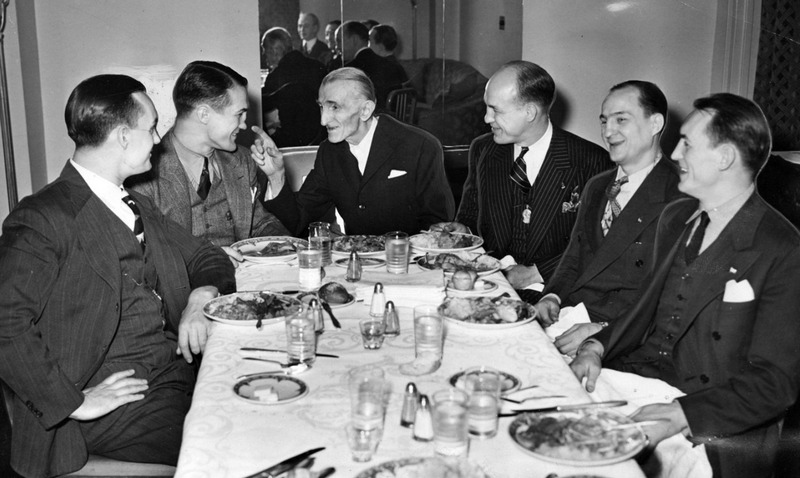
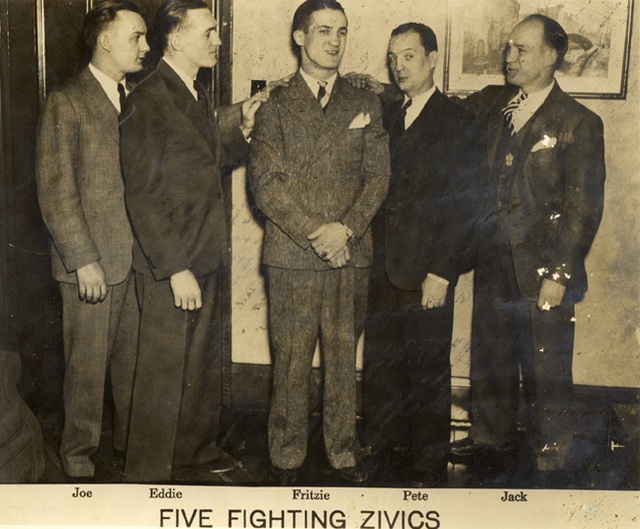
In 1941 Nikola Tesla invited to lunch with him in New York a famous Croatian-American boxer Fritzie Zivich,
known under the pseudonym The Croat Comet (as well as his brothers, who were also boxers),
after his successful defense of the world title in welter-weight category.
Source newsinteractive.post-gazette.com.
From left to right: Joe Zivic, Fritzie Zivic, Nikola Tesla, Jack Zivic, Pete Zivic and Eddie Zivic.
| Summary. Fritzie Zivic never asked why. He never asked if his opponent hit hard, if his opponent deserved the shot, if the opponent would be tough. He just said “yes” and signed the contract. Perhaps this fearlessness is the reason why Zivic may have fought a better array of boxers than any fighter in history. 23,190 people filled the Madison Square Garden in New York to the rafters when when Armstrong met Zivic again on January 17, 1941. This remains the all-time highest Garden record for attendance! After this match, great inventor Nikola Tesla invited his compatriot and his four brothers to celebrate this win in his hotel. See Tesla and Zivic on the photo. |
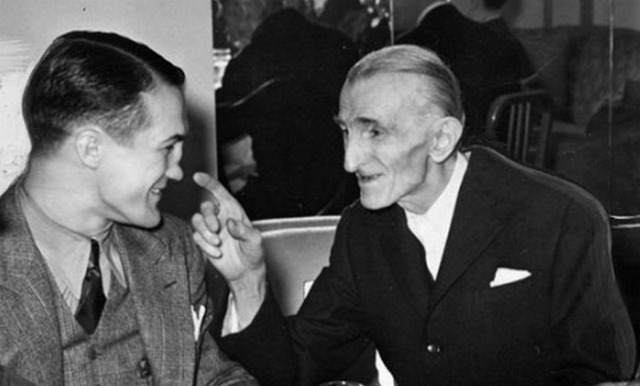
The Croat Comet Fritzie Zivich (originally Živčić) and Nikola Tesla
| Ferdinand “Fritzie” Zivic  Welterweight Champion of the World, 4 October 1940 – 29 July 1941.
Source www.clpgh.org |

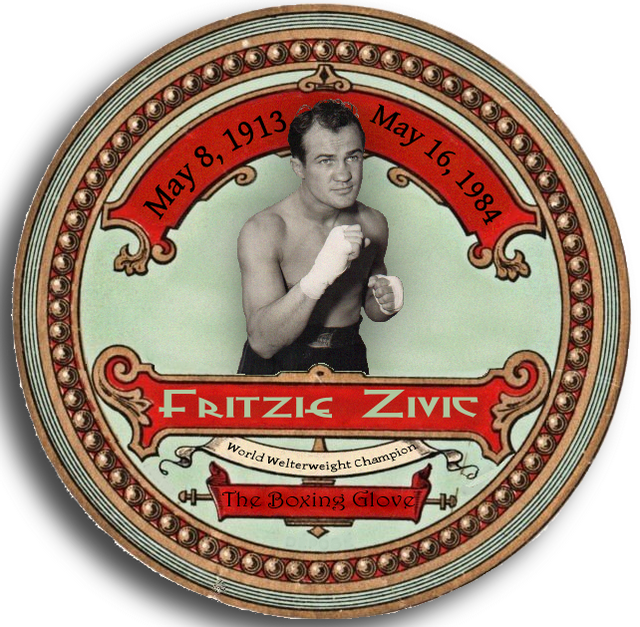
| Fritzie Zivic inducted into the International Boxing Hall of Fame in 1993 Born: May 8, 1913, Died: May 16, 1984 Bouts: 234 Won: 159, Lost: 65 Drew: 9, ND: 1 KOs: 81  Fritzie Zivic at the start of his boxing career.
He has been inducted into the International Boxing Hall of Fame in 1993 ALTHOUGH Fritzie Zivic is considered one of the dirtiest fighters in the history of boxing, he is also considered one of the best. |
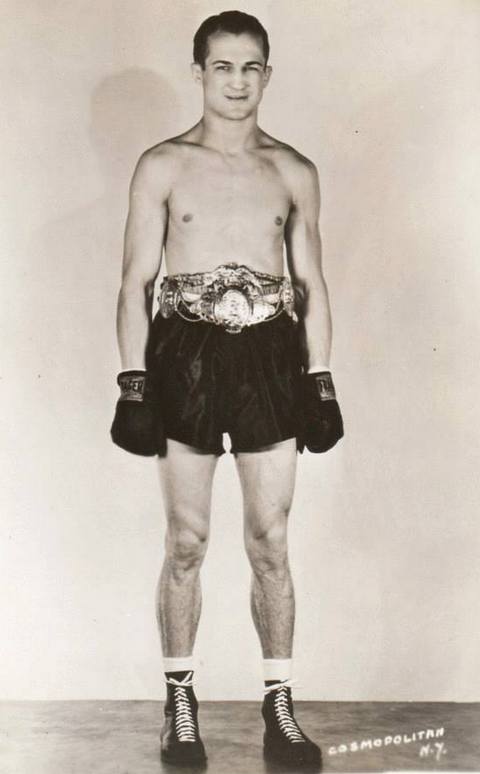
Firtzie Zivic, welterweight champion of the world in 1940/1941

Source: Croatians in America – photo collection by Vladimir Novak
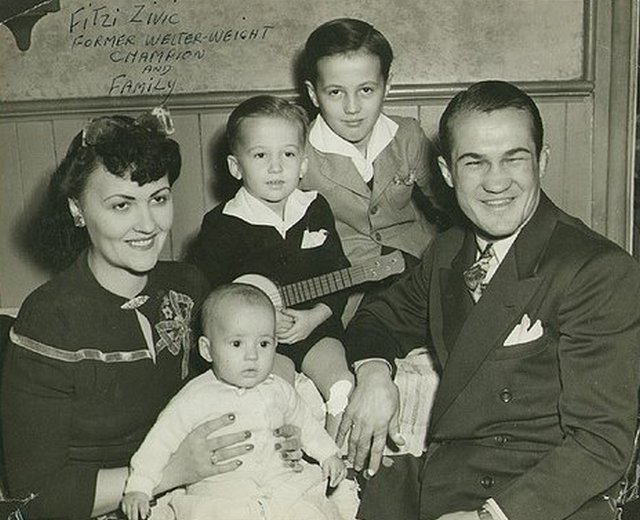
| Fritzie (Ferdinand) Zivic, svjetski prvak u velter kategoriji (1940-1941), rođen je u Pittsburghu 1913. Njegov otac Josip Živić došao je u Ameriku iz Bosiljeva iz Hrvatske godine 1899. i ondje je oženio mladu Slovenku Mary Kepele. Imali su šestero djece, od toga petero sinova od kojih su četvorica bili uspješni boksači. Fritzie je ovdje prikazan na naslovnoj stranici magazina Ring siječnja 1941. U 230 borbi Živić je pobijedio 155 puta, od toga 80 knockoutom. Izgubio je svega u 65 borbi. Prvak svijeta postao je 4. listopada 1940., u Madison Square Gardenu u New Yorku pobjedivši “nepobjedivog” Henry Armstronga. Povukao se 1949. u dobi od 36 godina. Godine 1972. izabran je u športsku Kuću slavnih boksača, a umro je 1984. u 71 godini. Sugar Ray Robinson je u povodu njegove smrti rekao da je o boksu naučio više tijekom deset rundi sa Živićem, nego u svim ostalim borbama zajedno. |
Fritze Zivic, welterweight champion of the world (1940-1941) was born in Pittsburgh in 1913. His father Josip Zivic came to the United States from Bosiljevo, Croatia, in 1899, and married a Slovene girl Mary Kepele in Pittsburgh. They had six children including five boys, four of whom were successful boxers. Fritze was featured on the cover of the Ring magazine in January 1941. He had 230 professional fights, winning 155 fights, 80 by KO’s. He lost 65 fights. He became champion of the world on October 4th 1940 in Madison Square Garden in New York, defeating “invincible” Henry Armstrong. Fritze retired in 1949 at the age of 36. In 1972 Zivic was elected to the Boxing Hall of Fame, and in 1984 he died at the age of 71. Sugar Ray Robinson, in a tribute, said that he learned more about boxing in ten rounds with Zivic than in all his other fights put together. |

Fritzie Zivic, pride of Pittsburgh
| Fritzie Zivic vs. Henry Armstrong It is January 17, 1941. World War II is raging in Europe, and the U.S. Selective Service Act, the former Draft Act, is only four months old. More than 23,000 fans have packed Madison Square Garden for the return bout between world welterweight champion Fritizie Zivic and the legendary Henry Armstrong. In this bout, “Perpetual Motion” all-time greatest pound for pound Armstrong tries to regain his world welterweight title from a man who knows but one rule -win. Henry Armstrong, who had held the world featherweight, lightweight, and welterweight titles — all at the same time — is widely acknowledged to be the all-time greatest fighter! Armstrong was forced to relinquish the featherweight title when he could no longer make the weight, and he lost the lightweight title back to Ambers in 1939. Only the world welterweight title remained, and Henry successfully defended that crown 19 times before losing it to Fritzie Zivic on a 15-round decision in New York’s famed Madison Square Garden by unanimous decision on October 4, 1940. The fight was so close going into the last round that many knowledgeable boxing men thought Armstrong would win in a return. The result, a fantastic rematch! 23,190 people filled the Garden to the rafters when when Armstrong met Zivic again on January 17, 1941. This remains the all-time highest Garden record for attendance! The hugely popular fight was carried over radio, with Sam Taub doing the blow-by-blow and Bill Stern between rounds commentator. Blow-by-blow announcer Sam Taub started working for the old New York Morning Telegraph in 1908, working with the legendary Bat Masterson, the former western lawman turned boxing writer. Fritzie’s elder brothers, Pete and Jack, were the first “Fighting Zivics,” representing the U.S. in 1920 Olympics at Antwerp — Pete as a flyweight, Jack as a feather. They were the only brothers to box in the same Olympics until 1976, when Leon and Michael Spinks both won the gold. “Perpetual Motion” Henry Armstrong scored more than his share of knockouts. In fact, his career total of 101 kayos puts him 10th on the all-time K.O. list. Source www.amazon.com/Fritzie-Zivic-vs-Henry-Armstrong |
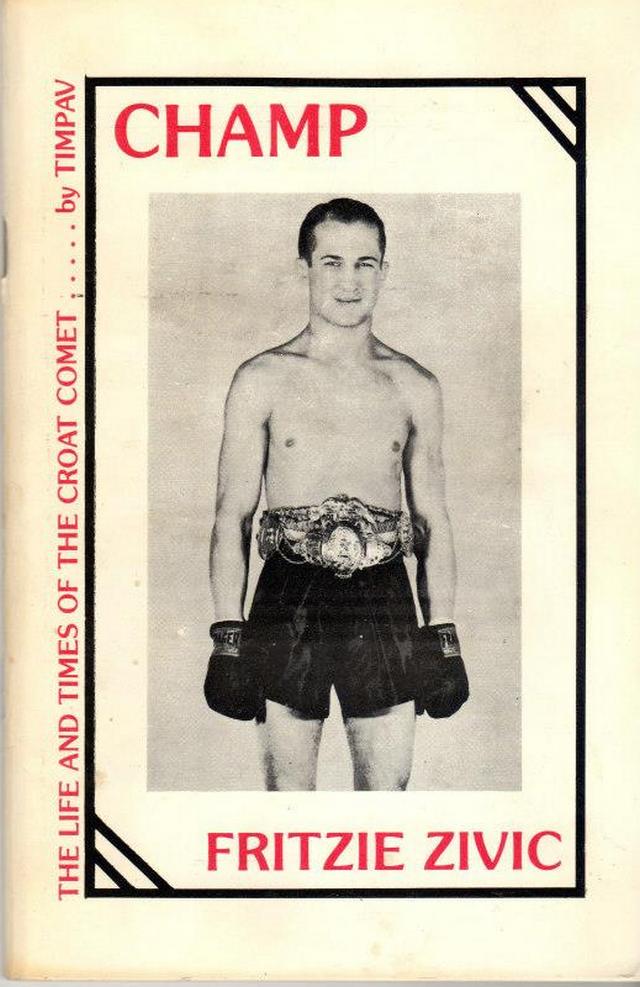
Champ Fritzie Zivic, The Life and Times of the Croat Comet,
biographical book written by Timpav, which is a pseudonym of Joseph M. Pavlak, an old friend of Zivic’s.


| School’s In: Fritzie Zivic Will See You Now By Matt McGrain on May 1, 2012 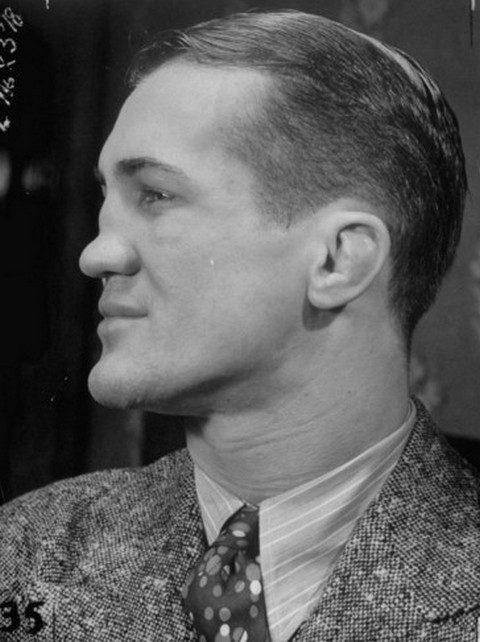 “He was a great teacher,” said Billy Conn. “[Fighting Zivic] was like going to college for five years, just boxing him ten rounds…” 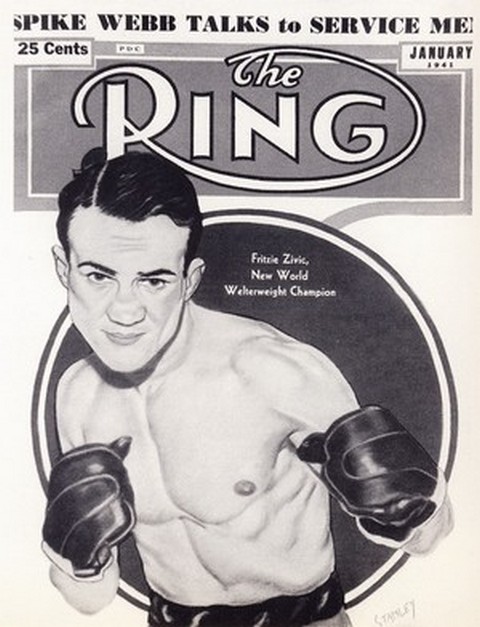 The press hadn’t yet been enlightened to Conn’s iron chin and it’s quite possible that Fritzie had found the “vital spot” over and again throughout the fight. As time would tell, even history’s mightiest puncher would struggle to get over on the near invulnerable Conn. However, at the beginning of the third Conn looked “tired, weary and worn out” and “in the fourth and fifth, Zivic, in a rushing charge, bore Conn to neutral ropes and belted him about the head and body until it seemed that the anticipated kayo was inevitable.” 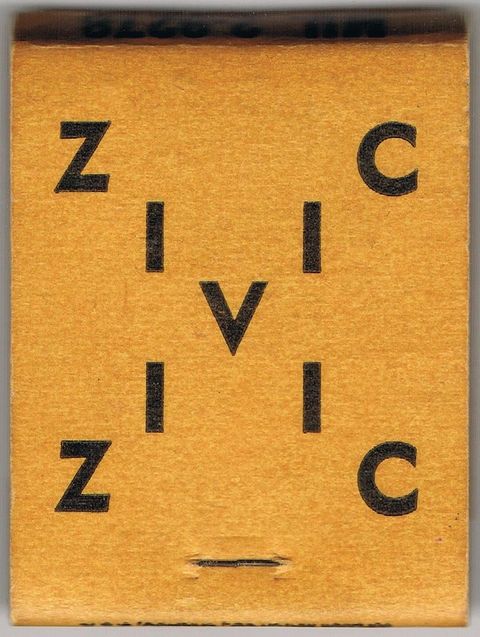 The Zivic matchbook.
As for the teacher, he was naturally disappointed and was keen on a rematch, but fate was to intervene. Zivic would contract pneumonia the following summer whilst training for a match with Vince Dundee. Chet Smith, then editor of The Pittsburgh Press:  Fritzie Zivic signed his photo in 1944
“It might have been a draw. It was close,” wrote The Telegraph Herald, but Zivic, the heavier man for a change, looked unsurprised at the unanimous decision against him. In the middle rounds he had, to a degree, had his way with Robinson but Sugar’s explosive domination of the ninth had left him struggling and at no time had he solved the Robinson jab. He knew he was beaten. “[Robinson] took a unanimous decision with such a convincing demonstration of speed and power,” wrote the Berkeley Daily Gazette, “that he will be favored to win the title.” |
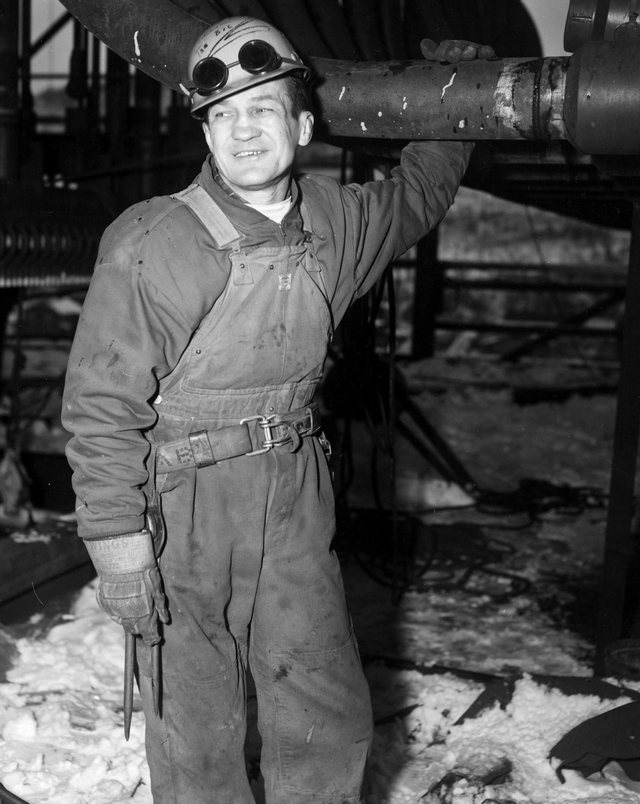

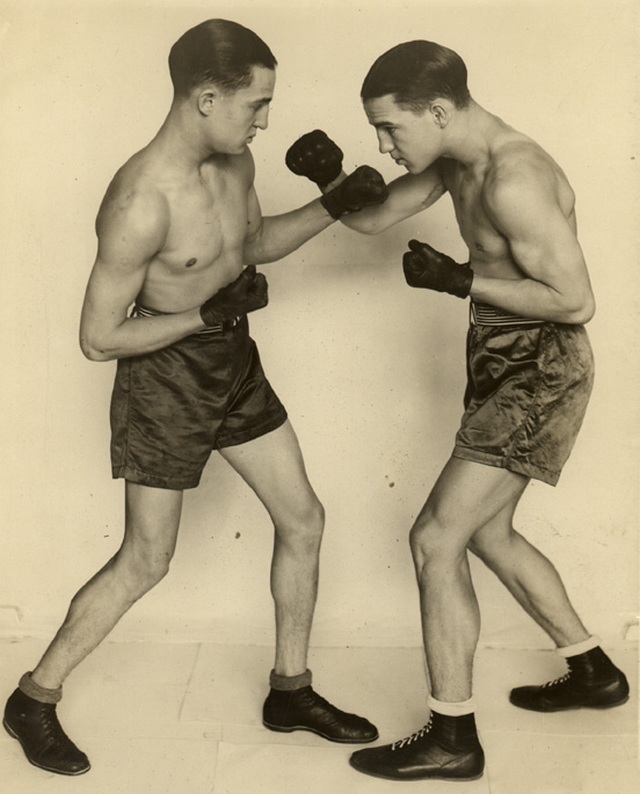
Young Eddie and Fritzie Zivic


Formated for CROWN by Darko Žubrinić
Distributed by www.Croatia.org . This message is intended for Croatian Associations/Institutions and their Friends in Croatia and in the World. The opinions/articles expressed on this list do not reflect personal opinions of the moderator. If the reader of this message is not the intended recipient, please delete or destroy all copies of this communication and please, let us know!


