
Zagreb’s double misfortune: corona virus and the earthquake; the earthquake damage is estimated at € 5.52 billion


|
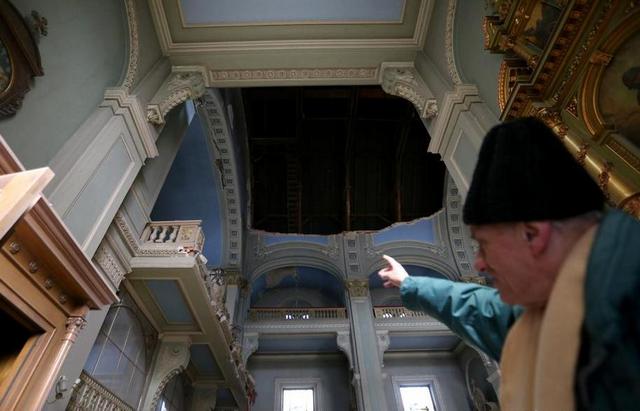
As if the vicious corona pandemic was not enough! In March 22nd 2020 at 6:24 AM, the city of Zagreb was suddenly struck with the earthquake of 5.5 degrees on the Richter scale. This was the strongest earthquake in Croatia’s capital since 1880. We mention in passing another earthquake in Zagreb 1909, which was quite important, since it has led distinguished Croatian scientist Andrija Mohorovičić to the discovery of the MOHO layer, conisdered as the most important discovery in the history of seismology (the science about earthquakes). The 2020 earthquake brought a lots of damage to the city, easpecially to its central part. During the period of one month only, Zagreb has experienced as many as eight hundred additonal smaller earthquakes and tremors.
Sredstva se uplaćuju na zasebne račune Ministarstva financija otvorene kod Hrvatske narodne banke, a Ministarstvo financija je zaduženo za praćenje namjenskog trošenja sredstava. In 1909, Andrija Mohorovičić, distinguished Croatian scientist working in Croatia’s capital Zagreb, discovered the MOHO discontinuity, now universaly known. This is considered as the basic and most important result of seismology, the science about earthquakes.
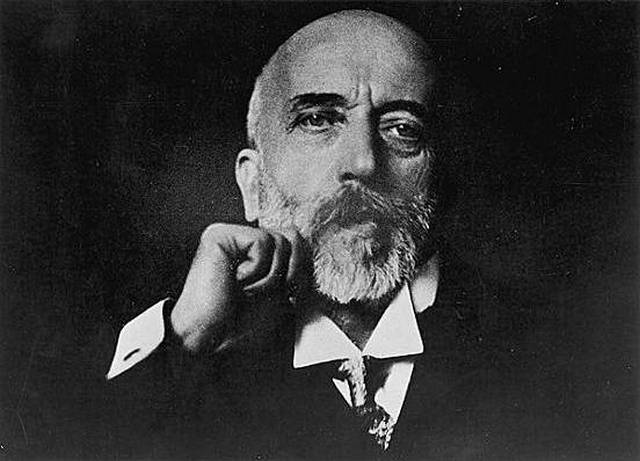 Andrija Mohorovičić (1857-1936), distinguished Croatian scientist in the field of seismology,
professor at the University of Zagreb |

2CELLOS – I Will Wait, Plitvice Lakes, Croatia

Nenad Bach Band with Radojka Šverko and Klapa Sinj: Can We Go Higher?,
in the Vatroslav Lisinski Concert Hall in Zagreb, 2012


2CELLOS – Moon River, Dubrovnik, Croatia

Luka Šulić plays Tchaikovsky Pezzo capriccioso
at the Croatian Music Institute in Zagreb (Hrvatski glazebni zavod, seriously damaged in 2020)
U boj, u boj – air from the opera Nikola Šubić Zrinski by Ivan Zajc, performed by Concordia Discors Choir

Cellomania Ensemble, directed by Valter Dešpalj, performing Heitor Villa Lobos at the Croatian Music Institute, Zagreb 2007.

Ana Vidović, distinguished Croatian classical guitarist, playing Allegro BWV 998 by J. S. Bach.
Matej Meštrović: HGZ Potresno

C.P.E. Bach – Cello concerto in A Major Wq 172 – Monika Leskovar with the Zagreb Soloists,
Page 2
Chopin – Nocturne in F Minor, Op 55, No 1 – Virna Kljaković, piano, Croatian Music Institute in Zagreb

Tango en Skai by Roland Dyens, performed by Petrit Ceku and Stjepan Hauser
with the Zagreb Philharmonic Orchestra conducted by Elisabeth Fuchs, at the Lisinski Concert Hall in Zagreb, 2017

Stjepan Hauser and Petrit Ceku performing Joaquin Rodrigo’s Adagio from Concierto de Aranjuez,
with the Zagreb Philharmonic Orchestra conducted by Elisabeth Fuchs, at the Lisinski Concert Hall in Zagreb, 2017.
Luka Šulić plays Gypsy Airs, Concert for Japan in 2011,
at the Vatroslav Lisinski Concert Hall in Zagreb

J. S. Bach: Cello Suite No.1 in G major played by Monika Leskovar, distinguished Croatian cellist,
in the town of Samobor near Zagreb, 2013

Greek-Catholics in Zagreb

Piazzolla: Oblivion, performed by 2CELLOS with the Zagreb Soloists,
at the Vatroslav Lisinski Concert Hall, Zagreb 2015

Martina Filjak, distinguished Croatian pianist, playing in Zagreb

Max Emmanuel Cenčić, Croatian countertenor, singing in his native Zagreb in 1983 (listen to him as a small child, since 0:51)


A view from the top of the bus, driven by Mrs. Nikolina Žiljak.

U boj, u boj – air from the opera Nikola Šubić Zrinski by Ivan Zajc, performed in Zagreb in 2013.
Conducted by Vladimir Kranjčević, in the “Anton Marti Studio” of Croatian TV. This Croatian song is very popular in Japan.


